
Dec 29Source: Intelligent Browse: 601
An S type tension & compression force sensor is a precision measurement device designed to accurately detect both tensile (pull) and compressive (push) forces. These versatile sensors are widely used in industrial automation, materials testing, packaging, and quality control systems where bidirectional force measurement is essential. As a reliable solution for high-accuracy force detection, the S type sensor helps engineers and technicians monitor performance and improve control in critical applications.
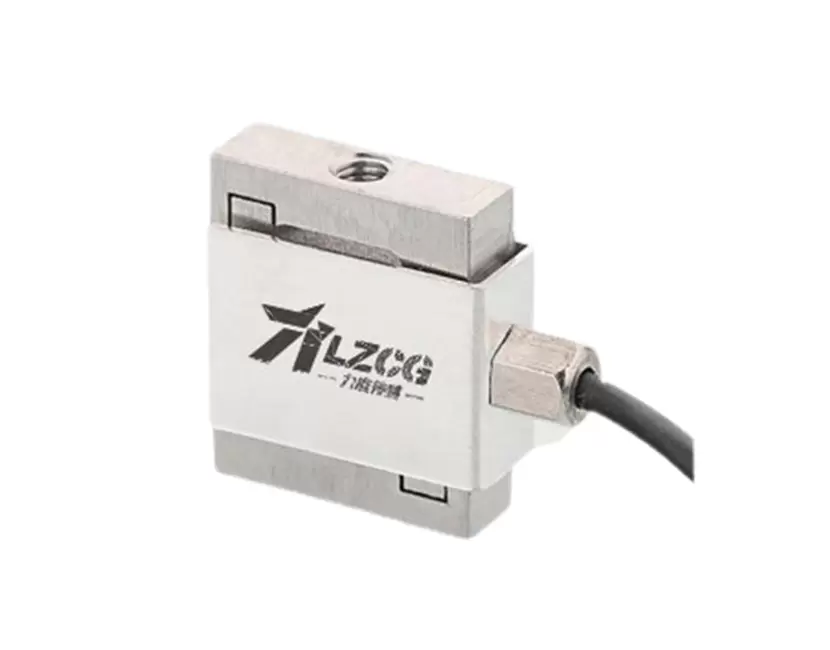
An S type tension & compression force sensor — often referred to simply as an S type load cell — is a kind of force transducer that converts applied force into an electrical signal proportional to its magnitude. What sets it apart is its ability to measure both tension and compression using a single sensing element. When force is applied in either direction, the internal sensing mechanism responds consistently, providing precise and repeatable measurements.
These sensors are essential in systems where bidirectional force feedback is required, such as tensile testing machines, robotic assembly stations, and dynamic weighing systems.
Force sensors come in several designs, each optimized for specific applications. Key differences between the S type sensor and other common force sensor types include:
Shear Beam Sensors – Shear beam load cells are typically used for heavy weighing applications like tanks or platforms. They measure shear force and are not optimized for bidirectional tension and compression measurements.
Bending Beam Sensors – Bending beam sensors detect force through beam deflection. They are often used in small scales or low-force applications but offer limited performance in high-precision tension/compression environments.
Column Type Load Cells – Column load cells are strong in compression measurement and suited for high-capacity applications, such as presses. However, they are not inherently designed to measure tension forces.
In contrast, an S type tension & compression force sensor combines both tension and compression capability in a single sensor, offering greater flexibility and reducing the need for multiple devices in systems requiring bidirectional force data.
The name “S type” derives from the physical shape of the sensor’s load-bearing element. When viewed from the side, the sensing body resembles the letter “S”, consisting of an upper and lower arm connected by a central section where strain gauges are mounted. This unique structure creates consistent strain distribution when force is applied, enabling reliable conversion of mechanical deformation into electrical signals.
Key structural features include:
Strain Gauge Bridge Circuitry – Precisely bonded strain gauges form a Wheatstone bridge that detects micro-changes in resistance as the sensor deforms under load.
Robust Load Bearing Design – The symmetrical “S” shaped body provides balanced mechanical response for tension and compression forces.
High-Accuracy Output – With careful design and calibration, S type sensors achieve minimal hysteresis and excellent linearity, making them ideal for demanding industrial environments.
This structural configuration not only supports bidirectional force measurement but also simplifies installation and integration into automated systems.
Shenzhen Ligent Sensor Tech Co., Ltd. is a leading manufacturer of precision sensors and force measurement solutions, including the S type tension & compression force sensor. With a focus on innovation, quality, and customer-centric engineering support, Ligent Sensor supplies high-performance load cells to industries ranging from manufacturing automation to advanced testing laboratories. Their products are valued for reliable performance, stable output, and compatibility with a wide range of control and data acquisition systems.

 EN
EN