
Mar 04Source: Intelligent Browse: 492
In modern automation, robotics, and precision measurement systems, the multi axis force torque sensor plays a critical role in delivering accurate, real-time force and torque feedback. As intelligent manufacturing continues to evolve, companies such as Shenzhen Ligent Sensor Tech Co., Ltd. are advancing multi-axis sensing technology to meet the growing demand for high precision, stability, and integration.
This article explores the common structural types and core components of multi axis force torque sensors.
Multi-axis sensors are designed to measure forces and torques along multiple directions simultaneously. Depending on application requirements, they are generally categorized into the following structural forms:
A 2 axis sensor typically measures force in two directions (such as Fx and Fy) or one force and one torque component.
Typical applications:
Basic planar force monitoring
Educational robotics platforms
Simple industrial testing systems
Advantages:
Compact design
Lower cost
Easy system integration
This type is suitable for applications where full 3D force measurement is not required.
A 3 axis sensor measures forces along three orthogonal axes (Fx, Fy, Fz). It captures spatial force data without torque measurement.
Typical applications:
Robotic gripping force detection
Assembly automation
Press-fit monitoring
Material testing
Advantages:
Accurate 3D force detection
Moderate complexity
Cost-effective compared to 6-axis systems
3-axis structures are widely used in industrial automation where torque measurement is not critical.
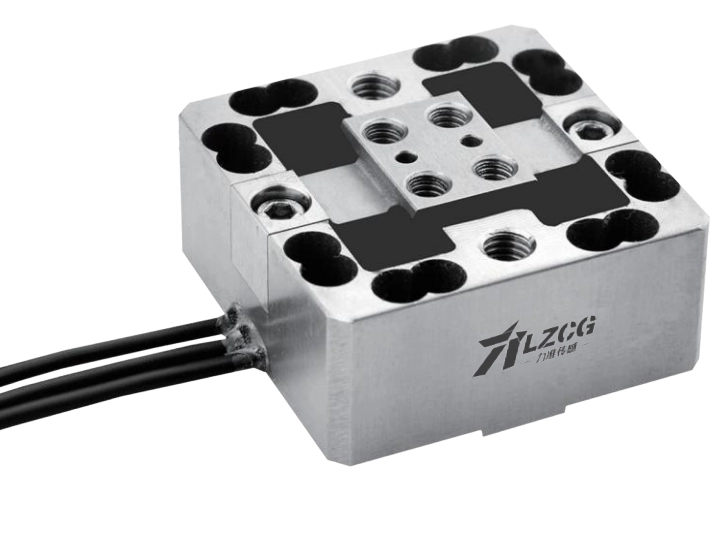
The 6-axis force sensor is the most advanced and comprehensive structure. It measures:
Forces: Fx, Fy, Fz
Torques: Tx, Ty, Tz
Typical applications:
Industrial robot end-effectors
Collaborative robots (cobots)
Aerospace testing
Medical robotics
Research laboratories
Advantages:
Full spatial force and torque measurement
High precision and sensitivity
Ideal for force feedback control systems
The 6-axis structure is essential in high-end robotic applications where real-time force control and human-machine interaction are required.
Regardless of structural type, multi-axis force torque sensors share several essential components that determine performance and reliability.
The elastic body is the mechanical core of the sensor. It deforms slightly under applied force or torque.
Key characteristics:
Made from high-strength alloy steel or aluminum
Designed with precise geometry (cross-beam, spoke-type, or parallel beam structure)
Optimized to minimize cross-axis interference (crosstalk)
The structural design directly affects accuracy, stiffness, and overload protection capability.
Strain gauges are bonded to the surface of the elastic body. When the structure deforms, the strain gauges detect micro-strain changes and convert them into resistance variations.
Features:
High sensitivity
Stable temperature performance
Arranged in Wheatstone bridge configurations
The placement and alignment of strain gauges are critical for accurate multi-axis decoupling and signal integrity.
The raw signal from strain gauges is extremely small (millivolt level). A signal conditioning circuit amplifies, filters, and converts this signal into usable output.
Key functions:
Signal amplification
Noise filtering
Temperature compensation
Analog-to-digital conversion
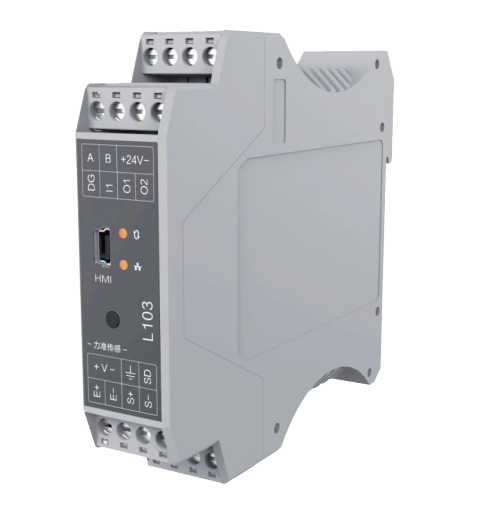
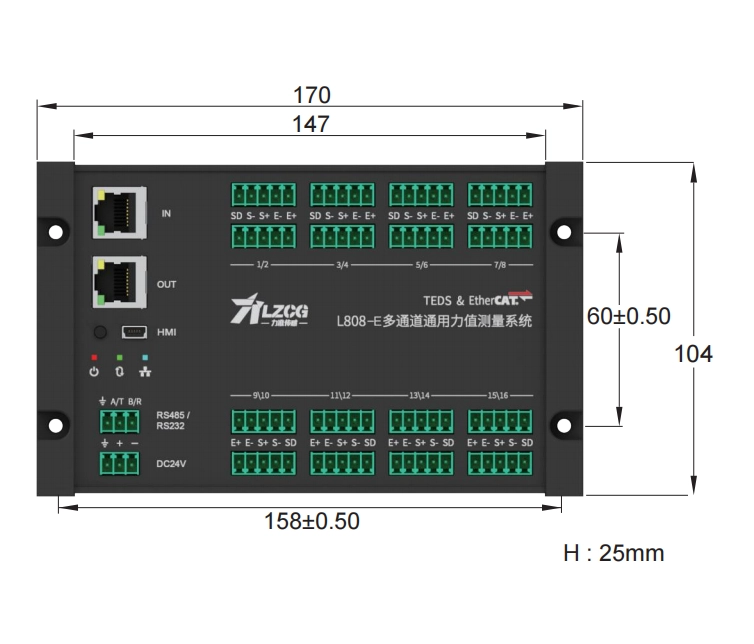
Advanced systems may include digital interfaces such as RS485, CAN, Ethernet, or USB for direct integration with control systems.
For multi-axis sensors, force components can influence each other. Therefore, calibration matrices and decoupling algorithms are used to:
Reduce cross-talk
Improve measurement accuracy
Ensure stable multi-axis output
High-end manufacturers apply precision calibration processes to guarantee consistent performance.
Multi axis force torque sensors are available in 2-axis, 3-axis, and 6-axis structures to meet different industrial requirements. From simple planar force detection to full six-dimensional force and torque measurement, each type serves a specific level of complexity and precision.
With carefully engineered elastic bodies, high-sensitivity strain gauges, and advanced signal conditioning circuits, manufacturers such as Shenzhen Ligent Sensor Tech Co., Ltd. continue to enhance sensor accuracy, stability, and integration capabilities for robotics, automation, and precision testing industries.
As intelligent manufacturing advances, multi-axis sensing technology will remain a fundamental component of next-generation force control systems.
https://www.ligentsensor.com/industry/Understanding-2-Axis-Force-Sensors.html
https://www.ligentsensor.com/industry/Multi-Axis-Force-and-Torque-Sensor.html
https://www.ligentsensor.com/industry/Multi-Axis-Force-Torque-Sensors-for-Precision-Measurement.html

 EN
EN