
Dec 03Source: Intelligent Browse: 792
A screw type tension & compression force sensor is a compact, high-precision load cell designed to measure both tensile and compressive forces through a threaded mounting structure. As a core product widely used across industrial automation, testing equipment, and mechanical assembly, this sensor offers stable performance and convenient installation. Shenzhen Ligent Sensor Tech Co., Ltd. provides advanced screw-type load sensing solutions that combine accuracy, durability, and ease of integration for various engineering applications.
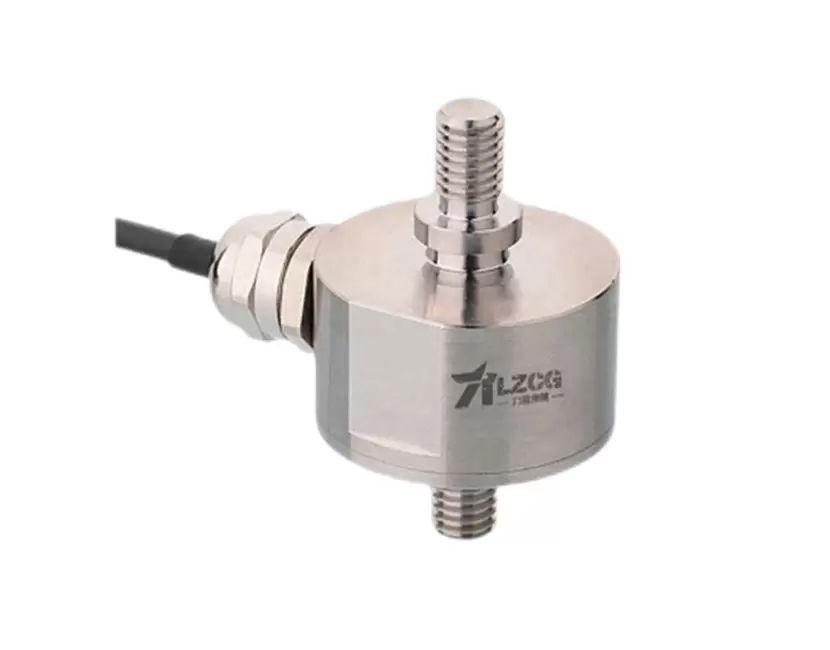
A screw type tension & compression force sensor is a bidirectional load cell capable of detecting pulling (tension) and pushing (compression) forces. Its cylindrical body is integrated with external or internal threads on one or both ends, allowing the sensor to be firmly connected to fixtures, actuators, or mechanical assemblies. This threaded form factor enables secure force transmission, making it ideal for compact installations and dynamic load monitoring.
The sensor operates on a strain-based measurement principle. When tension is applied, the sensor experiences elongation; when compression is applied, it undergoes slight deformation. These micro-deformations create changes in the internal strain gauges’ electrical resistance. The sensor converts these changes into a proportional electrical signal, allowing accurate measurement of both positive (compression) and negative (tension) force values.
The threaded connection is essential to the sensor’s performance and reliability.
Efficient force transmission: Threads ensure that the applied load is transferred directly and axially into the sensing element.
Easy integration: Users can mount the sensor directly onto machinery without additional adapters.
High mechanical stability: Threaded ends minimize misalignment and reduce the risks of lateral loading, which improves measurement accuracy.
Suitable for tight spaces: The screw-in design makes the sensor ideal for applications requiring minimal installation space.
Because the load acts directly along the threaded axis, the sensor achieves excellent repeatability and responsiveness in both tension and compression modes.
Inside the sensor, high-precision strain gauges are bonded onto a metallic elastic body. As the structure deforms under load, the strain gauges stretch or compress, causing their electrical resistance to change. This resistance variation is captured by a Wheatstone bridge circuit, which converts it into a stable electrical output. The resulting signal reflects the exact magnitude of the applied force.
This strain-based technology ensures:
High sensitivity
Reliable long-term stability
Fast response to dynamic loads
Excellent linearity across the full measurement range

 EN
EN