
Apr 14Source: Intelligent Browse: 420
Shenzhen Ligent Sensor Tech Co., Ltd. provides advanced industrial sensing technologies that are commonly applied in demanding environments such as tank weighing, silo monitoring, and heavy machinery force measurement, where stable performance under high loads is essential.
In large-scale industrial systems, cylindrical compression structures are often used when loads are high and installation conditions are complex. This type of design is typically referred to in engineering practice as a column load cell, and in many cases also described as a column type load cell or column force sensor depending on system integration and application background.
In automation and testing equipment, engineers may simply refer to it as a column sensor when discussing compact system layouts, but the core principle remains the same—accurate force conversion under high compression loads with strong structural stability.
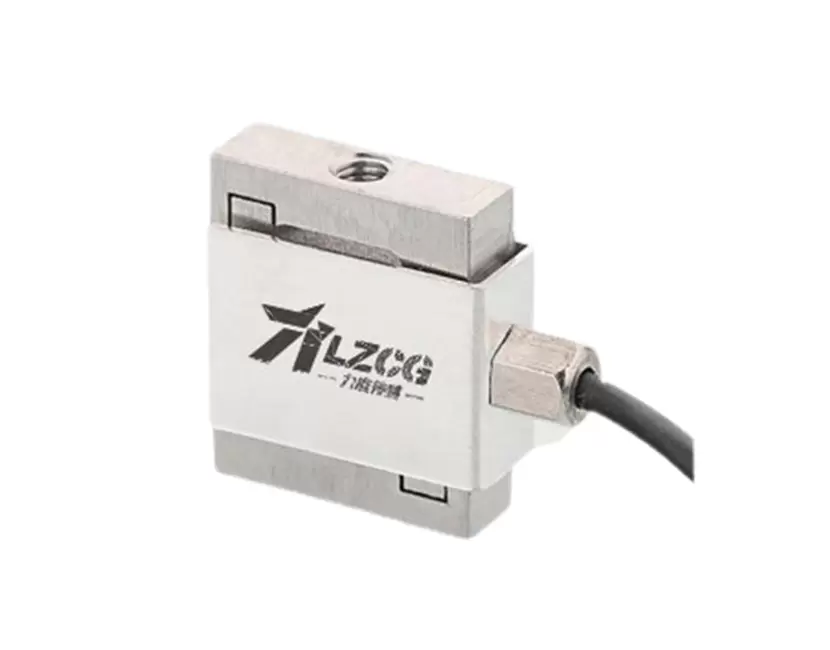
S-type load cells are commonly used in tension and compression applications where load ranges are moderate and installation flexibility is required. In contrast, column-based designs are more suitable for heavy industrial environments where long-term stability under high pressure is more critical than compact structure.
While S-type sensors are often chosen for general force measurement tasks, cylindrical compression designs are preferred in systems where overload resistance and structural rigidity cannot be compromised.
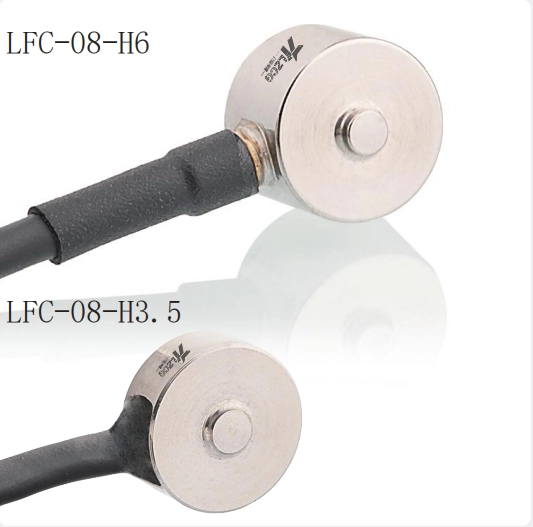
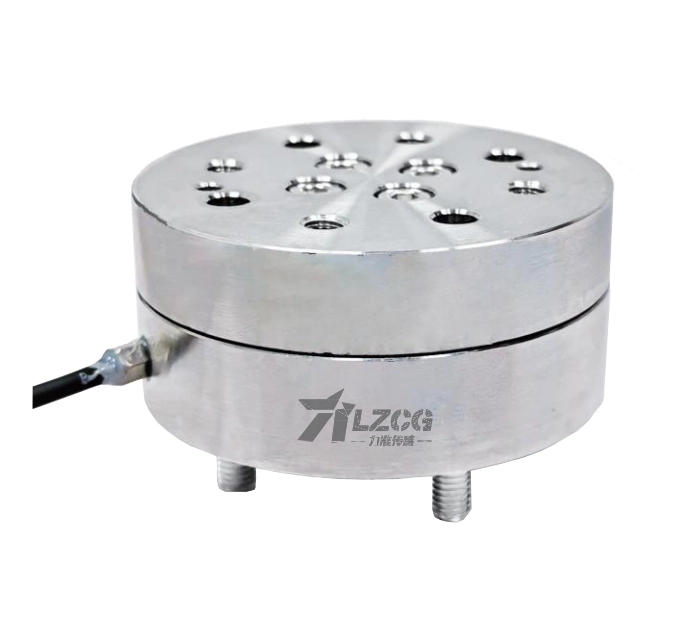
Flat, low-profile sensing structures such as pancake load cells are typically selected when installation space is limited. These designs are compact and easy to integrate into platforms or confined mechanical assemblies.
However, when the application involves large tanks, silos, or heavy vertical loads, cylindrical compression structures provide better mechanical stability and improved resistance to uneven loading conditions.
Beam load cells are widely used in platform scales and medium-capacity weighing systems due to their cost efficiency and flexible installation. They perform well in general industrial applications but are not typically designed for extreme load conditions.
For heavier industrial requirements, cylindrical compression designs are more suitable because they maintain measurement stability even under high force and long-term continuous operation.
In real-world industrial environments, the selection of a force measurement solution is often influenced by load level, installation constraints, and system stability requirements. Heavy-duty weighing systems, such as those used in chemical storage tanks, metallurgy, and bulk material handling, typically rely on cylindrical compression structures due to their durability and consistent output performance.
Shenzhen Ligent Sensor Tech Co., Ltd. develops force sensing solutions designed for industrial reliability and precision measurement. Their technologies are widely applied in systems requiring stable load detection under harsh operating conditions, supporting automation, process control, and heavy-duty weighing applications across multiple industries.
Different load cell structures are designed for different industrial needs. While beam, S-type, and pancake designs serve specific applications, cylindrical compression-based solutions remain a preferred choice in high-load environments where stability and durability are critical.

 EN
EN