
Jun 18Source: Intelligent Browse: 235
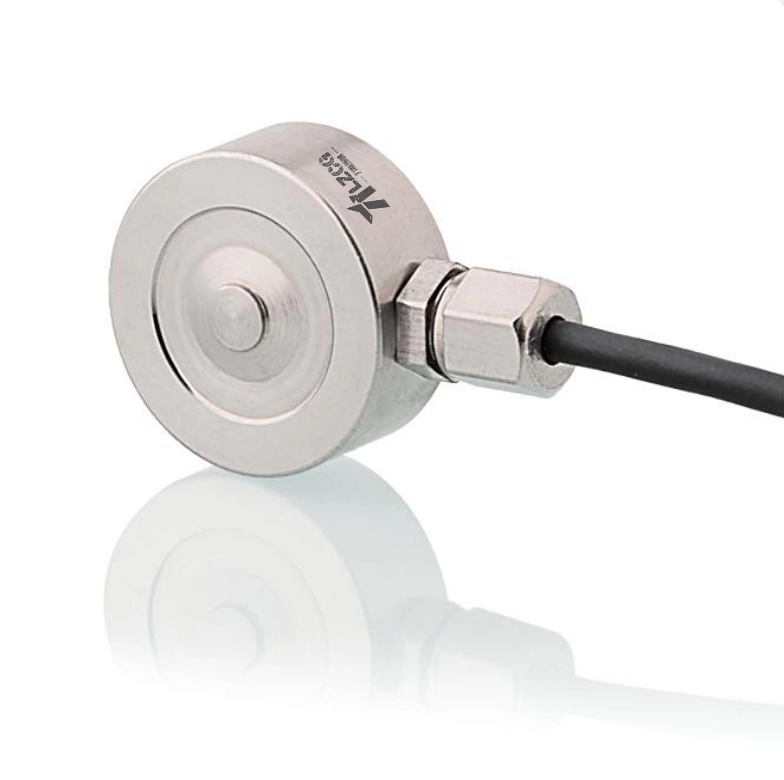
A miniature force sensor is a compact precision device designed to measure small-scale forces with high accuracy and stability. It is widely used in robotics, industrial automation, medical devices, electronics manufacturing, and precision testing systems.
As modern equipment continues to evolve toward miniaturization, intelligence, and high-precision control, miniature force sensors have become an essential component in advanced engineering systems.
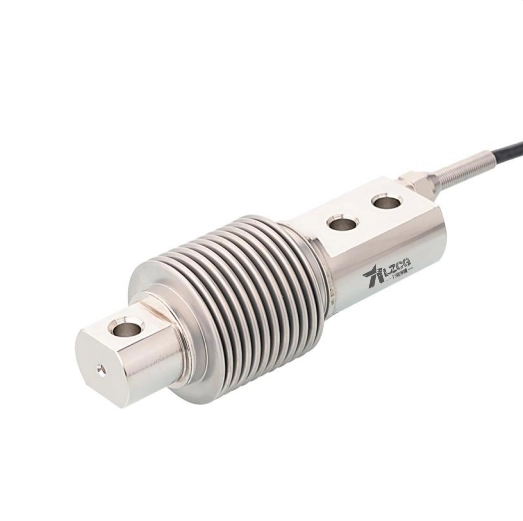
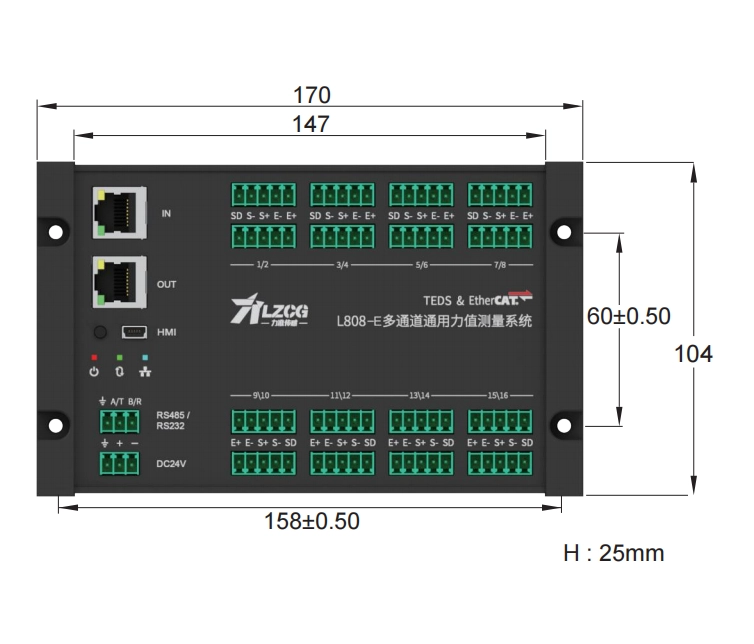
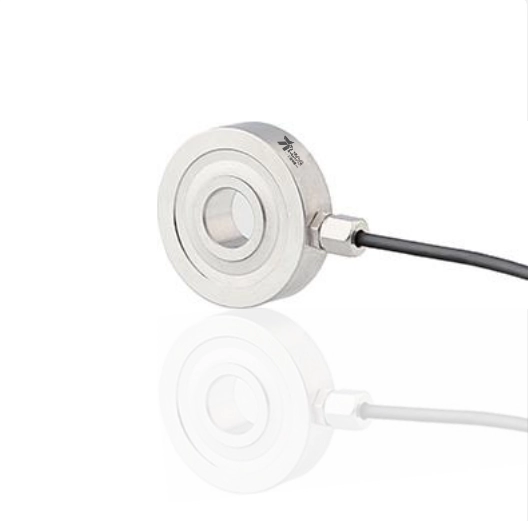
Shenzhen Ligent Sensor Tech Co., Ltd. specializes in force measurement technology and provides a wide range of force sensors, including miniature compression and tension load cells, multi-dimensional force sensors, and related measurement solutions for industrial and intelligent applications.
A miniature force sensor typically consists of three core components:
The elastic body is the mechanical structure that directly receives external force. When force is applied, it undergoes slight deformation.
Key functions include:
Transmitting external force
Ensuring controlled deformation
Maintaining structural stability under repeated loading
Materials are usually high-strength alloys or stainless steel to ensure durability and repeatability in long-term use.
Strain gauges are the core sensing components of the sensor. They are bonded onto the elastic body surface and convert mechanical deformation into electrical signals.
Working principle:
When the elastic body deforms under force, the strain gauge also deforms
This changes its electrical resistance
The resistance change is proportional to the applied force
To improve accuracy, multiple strain gauges are arranged in a Wheatstone bridge configuration, allowing:
Signal amplification
Temperature compensation
Improved stability and sensitivity
The signal output system processes the weak electrical signals generated by the strain gauges.
Its main functions include:
Signal amplification
Noise filtering
Analog-to-digital conversion (in advanced systems)
Output standard signals such as mV/V, 0–10V, or 4–20mA
This stage ensures the sensor can be easily integrated into PLC systems, industrial controllers, robotics, and data acquisition systems.
The working process can be summarized as:
Force → Elastic deformation → Strain change → Resistance change → Electrical signal output
This simple but highly precise mechanism allows miniature force sensors to measure very small force variations with excellent repeatability.
Despite their compact size, modern designs can achieve:
High sensitivity
Excellent linearity
Strong anti-interference capability
Long-term stability
With the rapid development of automation and intelligent systems, miniature force sensors are becoming critical in many industries. The reasons include the following:
Modern devices are becoming smaller and more compact, especially in:
Robotics
Consumer electronics manufacturing
Medical instruments
Precision assembly systems
Traditional large load cells cannot be integrated into limited spaces, while miniature force sensors provide high accuracy in extremely small installation areas.
Many modern applications require real-time force monitoring, such as:
Robot gripping force control
Precision pressing and assembly
Micro-force testing in electronics
Even small force deviations can cause:
Product damage
Assembly failure
Reduced product quality
Miniature force sensors ensure precise closed-loop force control.
Smart manufacturing systems rely on real-time data feedback. Miniature force sensors provide essential input for:
Adaptive control systems
AI-based robotics
Automated quality inspection
This enables machines to “feel” force changes and respond intelligently.
Many modern processes involve extremely small forces that are difficult to detect using conventional sensors. Miniature force sensors are designed specifically for:
Low-range force detection
High-resolution measurement
Fast dynamic response
This makes them ideal for precision industries such as 3C electronics and medical device manufacturing.
By integrating force sensing into production systems, manufacturers can:
Reduce defect rates
Improve assembly consistency
Minimize human error
Optimize production efficiency
This directly leads to higher product reliability and lower operational costs.
Miniature force sensors are widely used in:
Robot end-effectors (grippers and manipulators)
Electronic assembly and testing equipment
Medical diagnostic devices
Material testing systems
Automated production lines
Precision instrumentation
Their compact size and high accuracy make them indispensable in modern engineering environments.
A miniature force sensor combines mechanical engineering, strain measurement technology, and signal processing into a compact and highly accurate device. Its core structure—elastic body, strain gauges, and signal output system—enables precise force measurement in space-constrained environments.
As industries continue moving toward automation, intelligence, and miniaturization, miniature force sensors are becoming a foundational technology for modern equipment design.
With extensive experience in force measurement technology, Shenzhen Ligent Sensor Tech Co., Ltd. continues to develop high-performance sensing solutions that support advanced industrial automation, robotics, and intelligent manufacturing systems.

 EN
EN